

Why Is SF6 Gas Insulated Medium and High Voltage Switchgear RMU the Smartest Choice for Modern Power Distribution Systems
As power networks become increasingly complex, utilities and industrial facilities require safer, more compact, and highly reliable switching solutions. Timetric has developed advanced SF6 Gas Insulated Medium and High Voltage Switchgear RMU systems that provide excellent insulation performance, enhanced operational safety, reduced maintenance requirements, and superior space efficiency. This article explores the technology behind SF6-insulated Ring Main Units (RMUs), their advantages, applications, technical features, and how they support modern electrical distribution infrastructures.
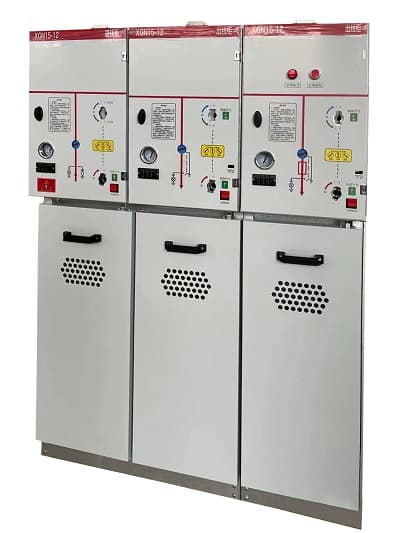
Table of Contents
- What Is SF6 Gas Insulated Medium and High Voltage Switchgear RMU?
- How Does an SF6 Gas Insulated RMU Work?
- Key Advantages of SF6 Gas Insulated Switchgear RMUs
- SF6 RMU vs Conventional Air-Insulated Switchgear
- Major Application Areas
- Important Technical Features
- How to Select the Right RMU
- Future Trends in SF6 Insulated Switchgear
- Frequently Asked Questions
- Conclusion
What Is SF6 Gas Insulated Medium and High Voltage Switchgear RMU?
A Ring Main Unit (RMU) is a compact and enclosed switchgear assembly designed for medium and high-voltage electrical distribution systems. The primary purpose of an RMU is to ensure reliable power supply continuity while enabling switching, isolation, protection, and fault management functions.
In an SF6 Gas Insulated Medium and High Voltage Switchgear RMU, sulfur hexafluoride (SF6) gas serves as the primary insulating medium. Due to its exceptional dielectric strength and arc-quenching properties, SF6 allows switchgear components to be housed within sealed gas tanks, significantly reducing equipment size while increasing operational reliability.
How Does an SF6 Gas Insulated RMU Work?
The RMU forms part of a ring distribution network where electricity can flow from multiple directions. This design improves network redundancy and minimizes downtime during faults.
Inside the sealed tank:
- SF6 gas provides insulation between energized components.
- Load break switches perform switching operations.
- Circuit breakers interrupt fault currents.
- Protection relays monitor network conditions.
- Busbars distribute power among feeders.
When faults occur, protection devices isolate the affected section while maintaining power supply to healthy sections of the network.
Key Advantages of SF6 Gas Insulated Switchgear RMUs
1. Exceptional Insulation Performance
SF6 gas possesses dielectric strength approximately two to three times higher than air. This enables more compact equipment designs while maintaining high safety margins.
2. Compact Footprint
Urban substations, industrial plants, commercial complexes, and renewable energy installations often face space constraints. Gas-insulated RMUs significantly reduce installation space requirements.
3. High Reliability
Sealed-for-life construction protects internal components from dust, moisture, pollution, and corrosive environments.
4. Reduced Maintenance
Compared with traditional switchgear, SF6 RMUs require minimal inspection and servicing, reducing lifecycle operating costs.
5. Enhanced Personnel Safety
- Internal arc resistance
- Interlocking mechanisms
- Grounding protection
- Sealed energized components
These features significantly reduce operational risks.
SF6 RMU vs Conventional Air-Insulated Switchgear
| Feature | SF6 Gas Insulated RMU | Air Insulated Switchgear |
|---|---|---|
| Insulation Medium | SF6 Gas | Air |
| Equipment Size | Compact | Larger |
| Maintenance Frequency | Low | Higher |
| Environmental Resistance | Excellent | Moderate |
| Operational Reliability | Very High | High |
| Installation Flexibility | Excellent | Limited |
| Service Life | 20-30+ Years | 15-25 Years |
Major Application Areas
Modern power distribution systems rely heavily on SF6-insulated RMUs across various sectors.
Utility Distribution Networks
Electric utilities use RMUs to improve distribution network reliability and facilitate fault isolation.
Renewable Energy Projects
- Solar power plants
- Wind farms
- Battery energy storage systems
- Hybrid energy facilities
Industrial Facilities
Manufacturing plants require stable power supply and fast fault isolation capabilities to avoid costly downtime.
Commercial Buildings
Airports, hospitals, shopping centers, and office complexes benefit from compact switchgear solutions.
Infrastructure Projects
- Railway systems
- Metro networks
- Data centers
- Smart city projects
Important Technical Features
Advanced SF6 RMUs from Timetric are designed to meet modern power distribution requirements.
| Technical Parameter | Typical Specification |
|---|---|
| Rated Voltage | 12kV / 24kV / 36kV |
| Rated Current | 630A |
| Short Circuit Breaking Capacity | 20kA – 31.5kA |
| Frequency | 50Hz / 60Hz |
| Protection Degree | IP67 Tank Protection |
| Insulation Medium | SF6 Gas |
| Service Life | 30 Years+ |
Core Design Characteristics
- Modular architecture
- Compact metal-enclosed structure
- Vacuum circuit breaker integration
- Remote monitoring compatibility
- SCADA communication support
- Intelligent grid integration capability
How to Select the Right RMU
Choosing an appropriate SF6-insulated RMU requires evaluation of several critical factors.
Voltage Level Requirements
Identify system operating voltage and future expansion needs.
Load Characteristics
Analyze current demand, peak loads, and future growth expectations.
Installation Environment
- Indoor installation
- Outdoor installation
- Coastal environments
- Industrial pollution zones
Protection Requirements
Determine required protection functions including fault detection, feeder protection, and automation features.
Compliance Standards
Ensure equipment complies with IEC standards and local utility specifications.
Future Trends in SF6 Insulated Switchgear
The electrical power industry continues evolving toward smarter and more sustainable infrastructure.
Several trends are shaping next-generation RMUs:
- Digital substations
- IoT-enabled monitoring
- Predictive maintenance systems
- Smart grid integration
- Advanced fault diagnostics
- Remote operation capabilities
Manufacturers like Timetric are continuously investing in research and development to improve operational intelligence, safety, and efficiency.
Frequently Asked Questions
What is the main purpose of an SF6 Gas Insulated RMU?
Its primary function is to provide reliable switching, protection, and power distribution while maintaining compact dimensions and high operational safety.
Why is SF6 used in switchgear?
SF6 offers outstanding dielectric strength and arc-quenching capabilities, making it highly effective for medium and high-voltage applications.
How long does an SF6 RMU typically last?
Most high-quality RMUs provide service lives exceeding 25 to 30 years with minimal maintenance.
Can SF6 RMUs be integrated into smart grids?
Yes. Modern RMUs support SCADA systems, remote monitoring, and automation technologies required by smart grid infrastructure.
Are SF6 RMUs suitable for renewable energy projects?
Absolutely. They are widely used in solar farms, wind farms, battery storage systems, and hybrid renewable installations.
What industries commonly use SF6 Gas Insulated Switchgear RMUs?
Utilities, manufacturing plants, transportation networks, commercial facilities, healthcare institutions, and data centers all utilize RMUs extensively.
Conclusion
The SF6 Gas Insulated Medium and High Voltage Switchgear RMU has become a cornerstone of modern electrical distribution systems due to its compact design, superior insulation performance, exceptional reliability, and low maintenance requirements. As electrical networks continue expanding and becoming more intelligent, gas-insulated RMUs will play an increasingly important role in ensuring uninterrupted power delivery and operational efficiency.
If you are looking for a dependable and future-ready switchgear solution, Timetric offers advanced RMU products engineered to meet the highest industry standards. Whether your project involves utility distribution, renewable energy integration, industrial facilities, or smart infrastructure development, our expert team can help you identify the ideal solution. Contact us today to discuss your project requirements and discover how our SF6 gas insulated switchgear RMU technologies can enhance the safety, reliability, and efficiency of your power distribution network.