

What Makes Indoor Vacuum Circuit Breakers the Preferred Choice for Medium-Voltage Systems?
Inside a medium-voltage substation, a row of metal-clad switchgear stands guard over the flow of electrical power. When a fault occurs—a short circuit, an overload, a cable failure—the circuit breaker must act decisively, isolating the faulted section before damage can spread. For decades, the choice of circuit breaker technology has been a subject of debate: oil, air, SF6, or vacuum. Today, however, a clear winner has emerged for indoor medium-voltage applications. The Indoor Vacuum Circuit Breaker has become the industry standard, selected by utilities, industrial facilities, and commercial buildings for its exceptional performance, reliability, and safety. But what is it about vacuum technology that makes it so compelling?
The Indoor Vacuum Circuit Breaker owes its dominance to a simple yet profound principle: the vacuum interrupter. By creating a near-perfect vacuum inside the interrupter chamber, the circuit breaker can extinguish the electric arc with remarkable speed and efficiency. Unlike air or oil, a vacuum has no gas molecules to ionize, so an arc cannot be sustained once the contacts part. This inherent advantage translates into faster interruption times, longer contact life, and minimal maintenance. Additionally, the vacuum interrupter is sealed for life, protecting the contacts from the environment and ensuring consistent performance over decades. This article will explore the technical, operational, and economic factors that make the Indoor Vacuum Circuit Breaker the preferred choice for medium-voltage systems, comparing it with alternative technologies and detailing the specific design features that deliver superior performance.
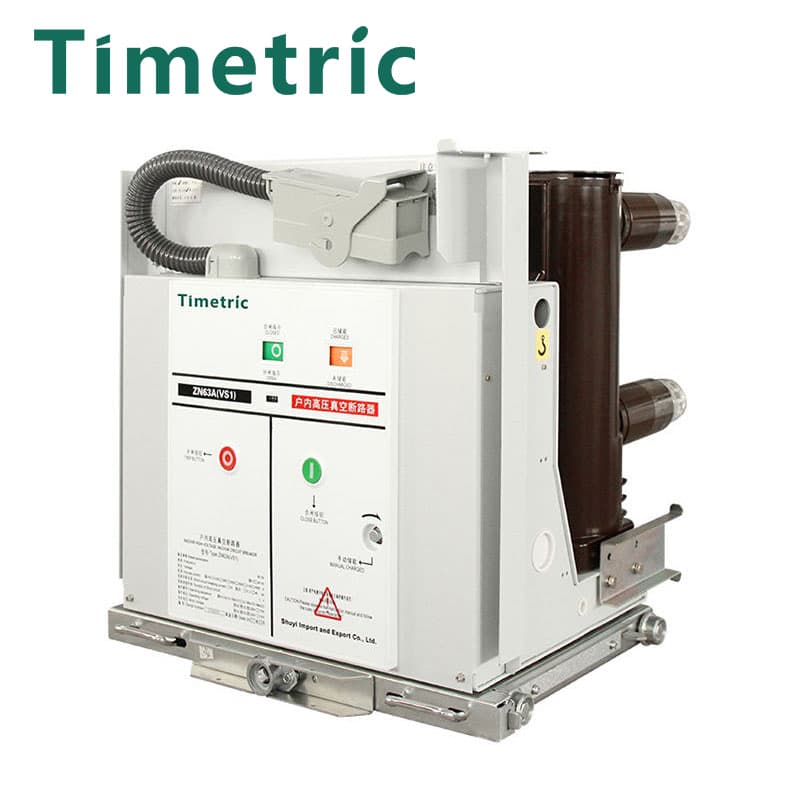
Table of Contents
- 1. What Is an Indoor Vacuum Circuit Breaker and How Does It Work?
- 2. Why Is Vacuum Superior to Other Interruption Media?
- 3. What Are the Key Technical Specifications of a High-Performance Indoor Vacuum Circuit Breaker?
- 4. How Does an Indoor Vacuum Circuit Breaker Improve System Safety and Reliability?
- 5. What Are the Maintenance and Lifecycle Cost Advantages?
- 6. How to Select the Right Indoor Vacuum Circuit Breaker for Your Application?
- 7. Frequently Asked Questions (FAQ)
- 8. Conclusion
1. What Is an Indoor Vacuum Circuit Breaker and How Does It Work?
An Indoor Vacuum Circuit Breaker is a type of electrical switchgear specifically designed for operation inside buildings, substations, and other indoor environments. It is used to protect medium-voltage circuits (typically 3.6 kV to 40.5 kV) from overcurrents and short circuits. The core of the Indoor Vacuum Circuit Breaker is the vacuum interrupter, a sealed ceramic or glass envelope containing a pair of contacts. One contact is fixed, and the other is movable. The interrupter is evacuated to a very high vacuum, typically in the range of 10⁻⁵ to 10⁻⁷ Torr. When the circuit breaker is closed, the contacts are pressed together, allowing current to flow. When a fault is detected, the operating mechanism rapidly separates the contacts.
As the contacts part, an electric arc forms between them. However, the arc exists only in the metal vapor that is evaporated from the contact surfaces. The vacuum environment has two key effects. First, the arc is very short-lived because there is no gas to ionize and sustain it. Second, the arc is quickly extinguished when the metal vapor condenses on the cooler surfaces of the interrupter. The arc is forced to travel along a spiral path on the contact surfaces, which helps to distribute the heat and prevent excessive contact erosion. The entire interruption process takes place in a few milliseconds, with the current being interrupted at the next natural zero crossing. The result is a clean, efficient interruption with minimal arc energy and no external emissions.
The design of an Indoor Vacuum Circuit Breaker also includes a robust operating mechanism, typically a spring or magnetic actuator that provides the necessary force and speed to open and close the contacts. The mechanism is designed for high reliability, with a life expectancy of 10,000 to 20,000 operations. The Indoor Vacuum Circuit Breaker is mounted in a metal-clad switchgear assembly, which provides the necessary insulation, protection, and control functions. The overall system is designed for safety, with interlocks, isolation, and earthing features. At Wenzhou Shuyi Import and Export Co., Ltd., our Indoor Vacuum Circuit Breaker are manufactured with precision and tested to ensure reliable performance under all operating conditions.
2. Why Is Vacuum Superior to Other Interruption Media?
To understand why vacuum is the preferred interruption medium for medium-voltage circuit breakers, it is helpful to compare it with the alternatives: air, oil, and SF6. Each of these media has been used in circuit breakers, but they all have significant drawbacks that make them less suitable for indoor medium-voltage applications. Air, for example, requires a large gap and high-pressure air blast to extinguish the arc, making the circuit breaker bulky and noisy. Oil is a fire hazard and requires regular maintenance to replace contaminated oil. SF6 is a potent greenhouse gas and is facing increasing regulatory restrictions.
Vacuum, by contrast, offers a unique combination of benefits that make it the ideal choice. The most significant advantage is the extremely high dielectric strength of a vacuum. A vacuum of 10⁻⁵ Torr can withstand a voltage gradient of up to 100 kV per millimeter, far higher than any gas or liquid. This allows the Indoor Vacuum Circuit Breaker to be much smaller and more compact than an air or oil circuit breaker of the same rating. The compact size is a major advantage for indoor installations where space is at a premium. The absence of an arc-quenching medium also means that the Indoor Vacuum Circuit Breaker is environmentally friendly, with no emissions or waste products.
Another key advantage of vacuum is the speed of interruption. A vacuum interrupter can extinguish an arc in as little as 10 milliseconds, faster than any other technology. This speed is critical for protecting sensitive equipment and minimizing the damage caused by a fault. The vacuum interrupter also has a very low arc voltage, which reduces the energy dissipated in the arc and minimizes contact erosion. As a result, the contacts in a Indoor Vacuum Circuit Breaker can last for 20,000 to 30,000 operations, far longer than those in air or oil circuit breakers. This extended life translates into lower maintenance costs and less downtime. The table below summarizes the comparison of interruption media.
| Property | Vacuum | Air | Oil | SF6 |
| Dielectric Strength | Excellent | Poor | Good | Excellent |
| Arc Interruption Speed | Fastest (10 ms) | Slow (30-50 ms) | Medium (20-30 ms) | Fast (15-20 ms) |
| Contact Life (operations) | 20,000-30,000 | 5,000-10,000 | 5,000-8,000 | 10,000-15,000 |
| Environmental Impact | None | Low | Oil contamination | High (greenhouse gas) |
| Fire Risk | None | Low | High | None |
| Maintenance Requirement | Minimal | Moderate | High | Moderate |
| Regulatory Restrictions | None | None | Oil disposal regulations | Increasingly restricted |
3. What Are the Key Technical Specifications of a High-Performance Indoor Vacuum Circuit Breaker?
Selecting the right Indoor Vacuum Circuit Breaker requires a thorough understanding of the key technical specifications. These parameters define the circuit breaker's performance capabilities, its physical characteristics, and its suitability for specific applications. The specifications are typically organized into three categories: electrical ratings, mechanical ratings, and environmental ratings. The electrical ratings are the most fundamental, determining the circuit breaker's ability to carry current and interrupt faults.
The primary electrical rating is the rated voltage, which is the maximum system voltage for which the Indoor Vacuum Circuit Breaker is designed. For medium-voltage applications, this is typically 12 kV, 24 kV, or 40.5 kV. The next critical rating is the rated current, which is the maximum continuous current the circuit breaker can carry without exceeding temperature limits. This is typically in the range of 630 A to 3150 A for medium-voltage switchgear. The rated short-circuit breaking current is the maximum fault current that the Indoor Vacuum Circuit Breaker can interrupt. This is a key safety parameter, and it is typically specified in kiloamperes (kA), with common values being 25 kA, 31.5 kA, and 40 kA.
The mechanical ratings cover the operating mechanism. The rated operating sequence defines the duty cycle of the circuit breaker, typically specified as "O - 0.3 s - CO - 3 min - CO" (Open - 0.3 seconds - Close-Open - 3 minutes - Close-Open). The mechanical endurance is the number of operations the circuit breaker can perform without requiring maintenance. A high-quality Indoor Vacuum Circuit Breaker will have a mechanical endurance of 10,000 to 20,000 operations. The environmental ratings include the degree of protection (IP rating), which defines the level of protection against ingress of solids and liquids, and the ambient temperature range. The table below provides a summary of the typical specifications for an Indoor Vacuum Circuit Breaker.
| Parameter | Typical Value | Notes |
| Rated Voltage | 12 kV, 24 kV, 40.5 kV | Match to system voltage |
| Rated Current | 630 A - 3150 A | Match to load current |
| Rated Short-Circuit Breaking Current | 25 kA, 31.5 kA, 40 kA | Must exceed system fault level |
| Rated Short-Circuit Making Current | 2.5 x Breaking Current | Peak current capability |
| Rated Operating Sequence | O - 0.3s - CO - 3min - CO | Standard duty cycle |
| Mechanical Endurance | 10,000 - 20,000 operations | Class M1/M2 |
| Electrical Endurance | 20,000 - 30,000 operations | Class E1/E2 |
| Opening Time | 30 - 50 ms | Time from trip to arc extinction |
| Closing Time | 40 - 60 ms | Time from close command to contact touch |
| Degree of Protection (IP) | IP4X to IP5X | Protection against dust and water |
| Ambient Temperature Range | -5°C to +40°C | Indoor operation |
4. How Does an Indoor Vacuum Circuit Breaker Improve System Safety and Reliability?
The safety and reliability of an electrical distribution system are paramount, and the choice of circuit breaker plays a central role in achieving these goals. The Indoor Vacuum Circuit Breaker offers several features that enhance system safety. The most significant is the sealed-for-life nature of the vacuum interrupter. The interrupter is a sealed unit, typically made of ceramic or glass, with no need for refilling or maintenance. This eliminates the risks associated with oil leaks, gas leaks, or air contamination. The vacuum interrupter is also insensitive to environmental conditions, such as humidity or dust, which can affect the performance of other types of circuit breakers.
The fast interruption speed of the Indoor Vacuum Circuit Breaker is another critical safety feature. The ability to clear a fault in 30-50 milliseconds minimizes the duration of the fault, reducing the thermal and mechanical stress on the system. This fast clearing time also reduces the risk of arc flash, a hazardous event that can cause severe injuries to personnel. The arc flash energy is proportional to the clearing time, so a faster circuit breaker significantly reduces the arc flash hazard. This is a major advantage of the Indoor Vacuum Circuit Breaker over slower technologies like air circuit breakers.
The Indoor Vacuum Circuit Breaker also offers excellent reliability through its simple, robust design. The operating mechanism is typically a spring or magnetic actuator, with few moving parts. The mechanism is designed for a long life, with high reliability and minimal maintenance. The use of vacuum interrupter technology eliminates the need for complex arc-chutes or arc-extinguishing systems, simplifying the design and reducing the number of potential failure points. This reliability is a key reason why utilities and industrial customers choose Indoor Vacuum Circuit Breaker for their critical applications. At Wenzhou Shuyi Import and Export Co., Ltd., we design our Indoor Vacuum Circuit Breaker with a focus on safety and reliability, ensuring that our customers can depend on their switchgear for uninterrupted power supply.
Furthermore, the Indoor Vacuum Circuit Breaker is inherently safe for personnel. Unlike oil circuit breakers, which can pose a fire risk, or SF6 circuit breakers, which can release toxic byproducts if the gas is decomposed, the vacuum interrupter contains no hazardous materials. The sealed vacuum chamber ensures that there is no risk of arc flash or explosion. The Indoor Vacuum Circuit Breaker is also designed with comprehensive interlocking systems that prevent accidental operation, further enhancing personnel safety.
5. What Are the Maintenance and Lifecycle Cost Advantages?
The lifecycle cost of a circuit breaker is a critical factor for project planning and budget allocation. While the initial purchase price is an important consideration, the total cost of ownership (TCO) over the service life of the equipment is often the more significant factor. The Indoor Vacuum Circuit Breaker offers significant lifecycle cost advantages over other types of circuit breakers, primarily due to its minimal maintenance requirements and long service life.
The maintenance requirements for an Indoor Vacuum Circuit Breaker are minimal. The vacuum interrupter is a sealed unit with no moving parts that require lubrication or adjustment. The contacts are sealed within the vacuum envelope and are not exposed to the atmosphere, so they do not corrode or oxidize. The operating mechanism is designed for a long life with minimal wear. In practice, an Indoor Vacuum Circuit Breaker may only require periodic lubrication of the operating mechanism and visual inspection of the mechanical components. This is in contrast to oil circuit breakers, which require regular oil testing, filtration, and replacement, or SF6 circuit breakers, which require gas handling and leak detection.
The long service life of the Indoor Vacuum Circuit Breaker is another major cost advantage. The vacuum interrupter can last for 20,000 to 30,000 operations, far exceeding the life of other technologies. This extended life means that the Indoor Vacuum Circuit Breaker may never need to be replaced during the lifetime of the installation. The investment in a high-quality Indoor Vacuum Circuit Breaker is therefore amortized over a longer period, reducing the annual cost of ownership. The table below illustrates the lifecycle cost comparison between an Indoor Vacuum Circuit Breaker and an SF6 circuit breaker over a 25-year period.
| Cost Category | Indoor Vacuum Circuit Breaker | SF6 Circuit Breaker | Notes |
| Initial Purchase Cost | Moderate | Higher | Vacuum technology is generally less expensive |
| Installation Cost | Similar | Similar | |
| Maintenance Cost (25 years) | $2,000 - $5,000 | $10,000 - $20,000 | Vacuum requires minimal maintenance |
| Gas Handling Cost | None | $3,000 - $10,000 | SF6 requires periodic handling |
| Spare Parts Cost | Low | Moderate | |
| Downtime Cost (25 years) | Low | Moderate | Vacuum has higher reliability |
| Replacement Cost | None | Potential replacement | |
| Total Lifecycle Cost | $20,000 - $35,000 | $40,000 - $60,000 | Significant savings with vacuum |
6. How to Select the Right Indoor Vacuum Circuit Breaker for Your Application?
Selecting the right Indoor Vacuum Circuit Breaker is a systematic process that involves evaluating the application's technical requirements, environmental conditions, and future expansion plans. The selection process should be guided by the following framework. The first step is to determine the system's voltage and current ratings. The Indoor Vacuum Circuit Breaker must be rated for the maximum system voltage, which is typically 12 kV, 24 kV, or 40.5 kV. The rated current must be sufficient to carry the maximum continuous load, with a margin for future growth.
The second step is to determine the fault current level. The Indoor Vacuum Circuit Breaker must have a short-circuit breaking capacity that exceeds the maximum possible fault current at the installation point. This requires a short-circuit study of the system, which calculates the symmetrical and asymmetrical fault currents. The circuit breaker's breaking capacity must be higher than the calculated fault current, with a suitable safety margin. The third step is to consider the operating environment. The Indoor Vacuum Circuit Breaker is designed for indoor use, but the specific environmental conditions, such as ambient temperature, humidity, and altitude, can affect its performance. The circuit breaker must be specified with the appropriate derating factors for high temperature, high altitude, or other special conditions.
The fourth step is to evaluate the required protection functions. The Indoor Vacuum Circuit Breaker is typically part of a switchgear assembly that includes protection relays, current transformers, and voltage transformers. The selection of the circuit breaker should be coordinated with these protection systems to ensure correct fault detection and clearing. Finally, consideration should be given to the manufacturer's reputation, quality certification, and after-sales support. The table below provides a selection framework for Indoor Vacuum Circuit Breaker based on common application requirements.
| Application Type | System Voltage | Rated Current Range | Breaking Capacity | Typical Application |
| Substation Distribution | 12 kV | 630 A - 1250 A | 25 - 31.5 kA | Distribution feeders, transformers |
| Industrial Power | 12 kV | 1250 A - 2000 A | 31.5 - 40 kA | Large motors, process equipment |
| Commercial Buildings | 12 kV - 24 kV | 630 A - 1250 A | 25 kA | Main distribution, backup generators |
| Renewable Energy | 24 kV - 40.5 kV | 630 A - 1250 A | 25 - 31.5 kA | Solar farms, wind turbines |
| Data Centers | 12 kV | 1600 A - 2000 A | 31.5 - 40 kA | Critical power distribution |
7. Frequently Asked Questions (FAQ)
Question 1: What is the typical service life of an Indoor Vacuum Circuit Breaker?
Answer: The typical service life of a high-quality Indoor Vacuum Circuit Breaker is 20 to 30 years or more. The vacuum interrupter itself is designed for a life of 20,000 to 30,000 operations, which far exceeds the typical operational requirements of a medium-voltage switchgear installation. The operating mechanism is also designed for high reliability, with a life expectancy of 10,000 to 20,000 operations. With proper maintenance, an Indoor Vacuum Circuit Breaker can outlast the substation itself.
Question 2: How does an Indoor Vacuum Circuit Breaker compare to an SF6 circuit breaker in terms of environmental impact?
Answer: An Indoor Vacuum Circuit Breaker has a significantly lower environmental impact than an SF6 circuit breaker. SF6 is a potent greenhouse gas with a global warming potential over 23,000 times that of CO2. The Indoor Vacuum Circuit Breaker, by contrast, uses a sealed vacuum interrupter with no greenhouse gas emissions. As a result, many utilities and industries are transitioning to Indoor Vacuum Circuit Breaker as part of their sustainability initiatives.
Question 3: Can an Indoor Vacuum Circuit Breaker be used for capacitor bank switching?
Answer: Yes, Indoor Vacuum Circuit Breaker can be used for capacitor bank switching, but they must be specifically designed for this duty. Capacitor bank switching requires circuit breakers with a high endurance and the ability to handle inrush currents. Our factory at Wenzhou Shuyi Import and Export Co., Ltd. offers Indoor Vacuum Circuit Breaker with dedicated capacitor switching ratings.
Question 4: What is the difference between a fixed and a withdrawable Indoor Vacuum Circuit Breaker?
Answer: A fixed Indoor Vacuum Circuit Breaker is permanently mounted in the switchgear panel. A withdrawable Indoor Vacuum Circuit Breaker is mounted on a trolley that can be rolled out of the panel for maintenance or replacement. Withdrawable circuit breakers offer greater flexibility and easier maintenance, but they are also more expensive. The choice depends on the specific requirements of the application.
Question 5: What are the typical maintenance requirements for an Indoor Vacuum Circuit Breaker?
Answer: The maintenance requirements for an Indoor Vacuum Circuit Breaker are minimal. The primary tasks are: periodic visual inspection of the circuit breaker and its mechanical components, lubrication of the operating mechanism according to the manufacturer's schedule, and occasional testing of the vacuum interrupter's integrity using a vacuum tester. The circuit breaker does not require regular calibration or adjustment of the contacts, as the vacuum interrupter is sealed for life.
8. Conclusion
The Indoor Vacuum Circuit Breaker has established itself as the preferred choice for medium-voltage systems by delivering a compelling combination of performance, reliability, and safety. Its superior interruption capabilities, compact size, and minimal maintenance requirements make it the ideal solution for a wide range of indoor applications. The vacuum interrupter technology ensures fast, clean interruption, while the sealed design provides long-term reliability and environmental safety. When compared to other technologies, the Indoor Vacuum Circuit Breaker offers significant advantages in terms of total cost of ownership, safety, and regulatory compliance.
For engineers, system designers, and project managers, selecting the right Indoor Vacuum Circuit Breaker is a critical decision that impacts the performance and reliability of the entire electrical system. By considering the technical specifications, application requirements, and lifecycle costs, it is possible to choose an Indoor Vacuum Circuit Breaker that will provide reliable service for decades.
At Wenzhou Shuyi Import and Export Co., Ltd., we are committed to providing high-quality Indoor Vacuum Circuit Breaker that meet the most demanding industry standards. Our products are designed with a focus on reliability, safety, and innovation. We invite you to contact our team to discuss your specific requirements and discover how our Indoor Vacuum Circuit Breaker can enhance the performance and reliability of your medium-voltage system.
Contact Wenzhou Shuyi Import and Export Co., Ltd. today to learn more about our Indoor Vacuum Circuit Breaker solutions and how they can benefit your application.